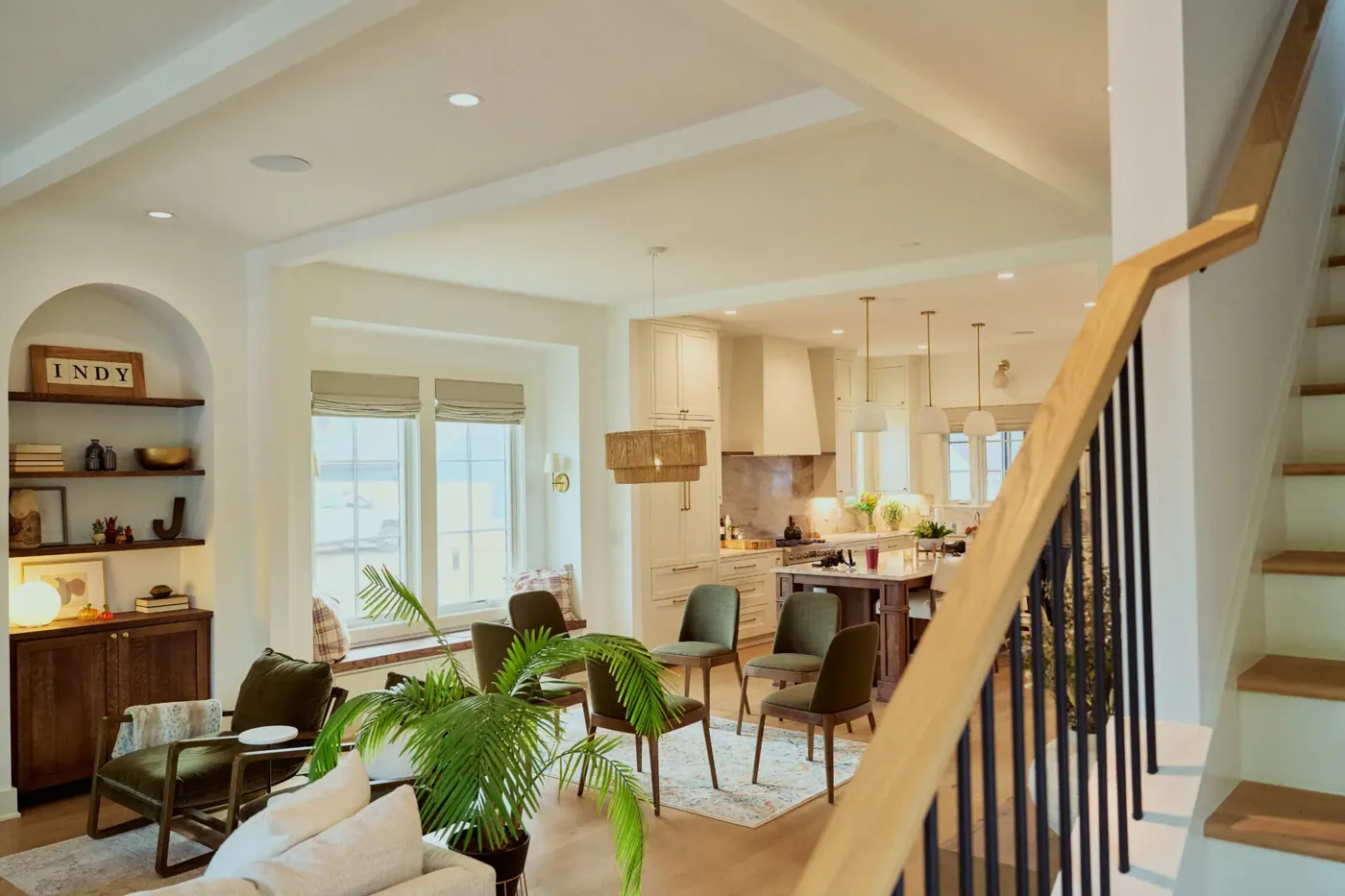
Custom Blinds, Shades and Shutters in Plainfield
Blinds, shades, shutters and drapery measured in your Plainfield home. Free in home measure, a written quote, and the covenant questions answered before anything goes on the front of your house.
If we're busy with another customer and miss your call, leave a message and we'll call you back.
Before you spend anything on a Plainfield project, it helps to know how inside mounts leak light, what motorized shades need annually, and why custom fabrication takes weeks. All three are covered below.
- Services: faux wood blinds, wood blinds, vertical blinds, aluminum mini blinds
- Service area: Plainfield, Hendricks County, IN and surrounding areas How soon depends on which job it is. A new custom order waits on fabrication, typically two to five weeks after the measure. A repair like a restring or a cord lock doesn't wait on anything.
- Insured and bonded
- Serving Plainfield, IN since 2008
Schedule Your Free In-Home Measure
The measure is free and it happens in your house, not over a photo. We take width at head, center and sill, height at left, center and right, and we build from the smallest reading. Every opening gets a square check, which matters more in Plainfield than in Avon or Brownsburg because 28.2 percent of this town predates 1980 and 2.9 percent predates 1940. Mounting depth is written down per opening rather than assumed from the year on the county record. You keep the numbers whether you order or not.
I agree to be contacted by Plainfield Window Treatments regarding my inquiry.
Plainfield has the oldest housing stock of the three large Hendricks County towns, and that shows up at the window before it shows up anywhere else. About 391 units predate 1940, another 25.3 percent went up between 1940 and 1979, and the National Register district along Main Street carries 174 contributing buildings dating from roughly 1840 to 1959. Those openings are deep and genuinely out of square, often at the same time. Then the town median year built is 2000, and the covenanted brick subdivisions of that decade sit their ground floor openings in masonry with a real reveal. The current attached product at Bo-Mar Estates and Saratoga Village runs drywall returns with no casing at all. Three mounting conditions inside one ZIP code. We measure before we quote, every time.
Roman shades come in flat fold, hobbled and relaxed styles, and they behave differently. Flat fold reads tailored and shows fabric cleanly. Hobbled keeps soft folds even when it's down. Relaxed has a gentle curve at the bottom hem. All three stack at the top, so on a short Plainfield window you lose some view height when the shade is raised. That stack height is worth knowing before you fall in love with a fabric.
After install we leave you with the care instructions that actually apply to what you bought. Faux wood wipes down. Cellular fabric gets vacuumed with a brush attachment and does not get wet. Woven woods take a dry dust and nothing else. Shutter louvers take a damp cloth on composite, dry on hardwood. Doing the wrong one is how a Plainfield shade gets ruined in its first year.
Built in the Last Few Years?
Many of our Plainfield customers moved into a house built by one of these companies. Builder blinds are usually stock sizes trimmed to fit, so if yours came with the house and never ran right, that is why. We measure the openings as built rather than off the plan.
Named for identification only. Plainfield Window Treatments is an independent company and is not affiliated with, endorsed by, or acting as a representative of any homebuilder listed.
What Matters at the Window in Plainfield
What our crew has learned working in Plainfield homes.
About Plainfield Homes
Plainfield's median house dates to 2000. Build era shares on the parcel record run pre-1940 2.9%, 1940-1979 25.3%, 1980-1999 21.6%, 2000-2019 44.4%, 2020+ 5.8%. Median home value is $280,600. Plainfield spans the widest casing range of the three Hendricks towns because 28.2 percent of its stock predates 1980. Historic district houses have deep applied wood casing and real jamb depth; the post war ranches have shallow jambs and thin casing; the covenanted 2000s brick homes have masonry openings with generous reveals; the newest product has drywall returns and no casing at all. mid-19th to mid-20th century Greek Revival, Gothic Revival, Italianate, Queen Anne and Craftsman bungalow in the historic district; post war ranch and split level along the old National Road corridor; 2000s all brick covenanted custom on half acre lots (Hickory Woods, Saratoga Woodlands, Avalon. Typical opening count: Bimodal.
Where We Work in Plainfield
We cover homeowners across Plainfield near The Shops at Perry Crossing, Splash Island and the Richard A. Carlucci Recreation and Aquatic Center, Hummel Park, the Vandalia Trail, Hobbs Station, the Plainfield Historic District along Main Street.
Surrounding Areas We Serve
Our crew also covers Plainfield Historic District, Hickory Woods, Willow Pointe and Ridge at Willow Pointe, Avalon Estates, Saratoga Woodlands, Saratoga Village, The Landings at Hobbs Station, Trescott, Bo-Mar Estates, Vandalia by Del Webb.
Recent Weather Patterns
Central Indiana sits in IECC climate zone 5A, which means a real cooling load and a real heating load on the same window. NOAA's 1991-2020 normals for Indianapolis put the July average high at 85.2F, the January average high at 36.1F and the January average low at 20.9F, with the muggy season running May 25 to September 22. Plainfield's canopy is oldest around the historic district and the old National Road corridor, where 28.2 percent of the town's housing predates 1980.
What Our Crew Sees in Plainfield
Two distinct problems. The historic district produces transoms over entries, tall narrow paired openings and period specific proportions on Greek Revival, Italianate and Queen Anne houses. The 2000s brick estate stock produces two story great room walls and arched or palladian heads. Very little of either shows up in the current townhome and paired villa product. Active new construction includes The Landings at Hobbs Station, Hidden Lanes at Hobbs Station, Trescott, Saratoga Village, Gray Hawk Place.
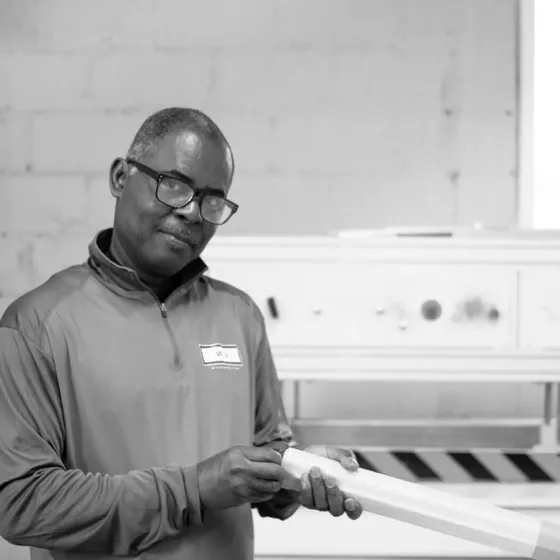
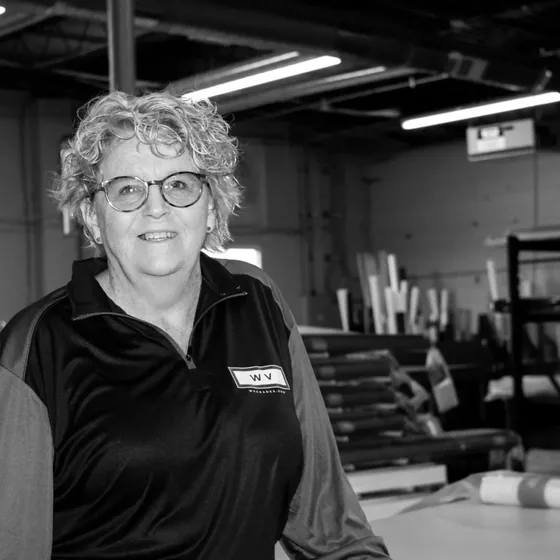
Who Actually Turns Up in Plainfield
The same people measure, order and install. Customers name them in reviews, which is the point: you are not getting a subcontractor you have never heard of.










What We Are Running in Plainfield Right Now
Both offers apply to work quoted and ordered while they are posted here. Ask about them at the in-home measure and we will put the discount on the written quote before you decide anything.
$500 Off Your First Exterior Screen, Plus a Free Motorization Upgrade
Take $500 off your first exterior screen and we will add the motorization upgrade at no charge. Exterior screens stop solar heat outside the glass, which is the only place you can stop it before it is already in the room, and a motor is the difference between using one and forgetting it.
Applies to a first exterior screen. Ask at the measure so the discount is on the written quote before you order. Motorized product runs on batteries that need replacing, about a year on Hunter Douglas PowerView.
Ask about this offerFree Motorization Upgrade on Select Interior Shades
Pick from the qualifying interior shade lines and the motorization upgrade is free. It is worth most on the openings you would otherwise leave alone: tall great room glass, anything above a stair, and the west windows nobody remembers to close by four.
Select interior shade lines only. We will tell you at the measure which of your openings qualify. Batteries are a real running cost and are not included.
Ask about this offerPayment Options That Work for You
A window covering project is worth doing right the first time. Financing options through Plainfield Window Treatments lender partners help you pay over time instead of cutting scope or delaying the work.
Start the work now and begin paying later. On a whole-house order this is how people phase a large job without phasing the install.
- Payments deferred for a promotional period
- Rate and period set by the lender
- Quoted price held for the order
Divide the project cost into equal monthly payments across a fixed promotional period, so the budget is predictable from day one.
- Equal monthly payments
- Fixed promotional period
- Simple, predictable budgeting
Spread a larger window treatment project across a longer term with fixed equal payments, for homeowners who want the lowest monthly amount.
- Extended terms available
- Fixed equal payments
- Suited to larger window treatment projects
Financing is arranged through third party lenders and is subject to credit approval. Rates, terms, and promotional periods are set by the lender and disclosed to you in writing before you sign. Ask your project lead which programs are open right now.
Window Treatment Services in Plainfield
From one room to a whole house, Plainfield Window Treatments measures every opening, orders it custom, and installs it with the same crew that took the measurements.
Faux Wood Blinds in Plainfield
Color gets picked in the room, not out of a book under store light. A white that reads warm on a north-facing Plainfield wall reads cooler on the south. It'll slow fading on your floors without stopping it, since NFRC attributes 40 to 60 percent of fade damage to UV.
Learn moreWood Blinds in Plainfield
Order the whole Plainfield house at once if you can. A slat stained a year from now comes off a different lot of wood and a different batch of stain, and beside the original it'll read warmer or cooler. Nobody can promise a match on a natural product.
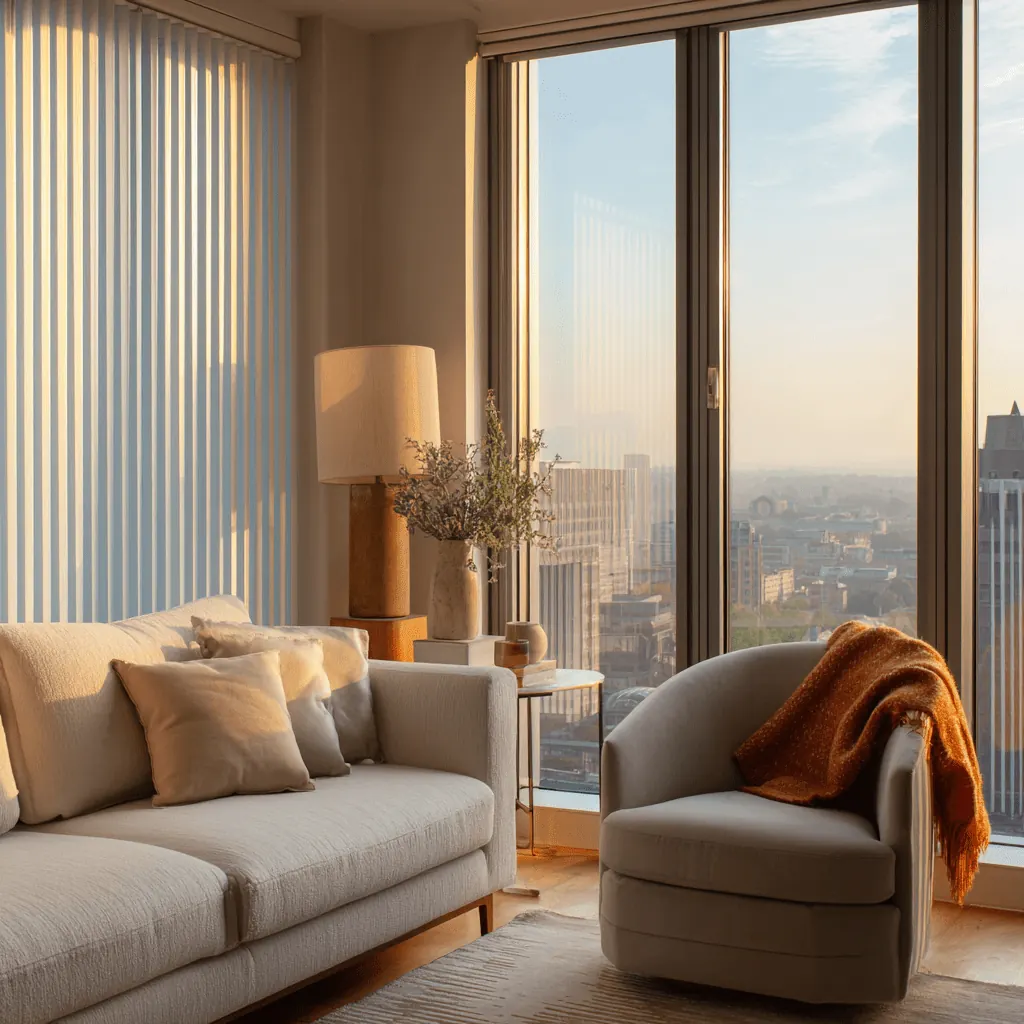
Learn moreVertical Blinds in Plainfield
Against a panel track, a vertical costs less and gives you infinite tilt positions rather than just open or closed. Against a roller shade, it stacks off the glass instead of rolling over it. That's why Plainfield patio doors keep coming back to vanes.
Learn moreAluminum Mini Blinds in Plainfield
Aluminum comes in whites plus a range of colors a wood product can't do. A painted finish holds up under sun for years, though it isn't immune, and the blind slows the fading of what's behind it in a Plainfield room without ever stopping it.
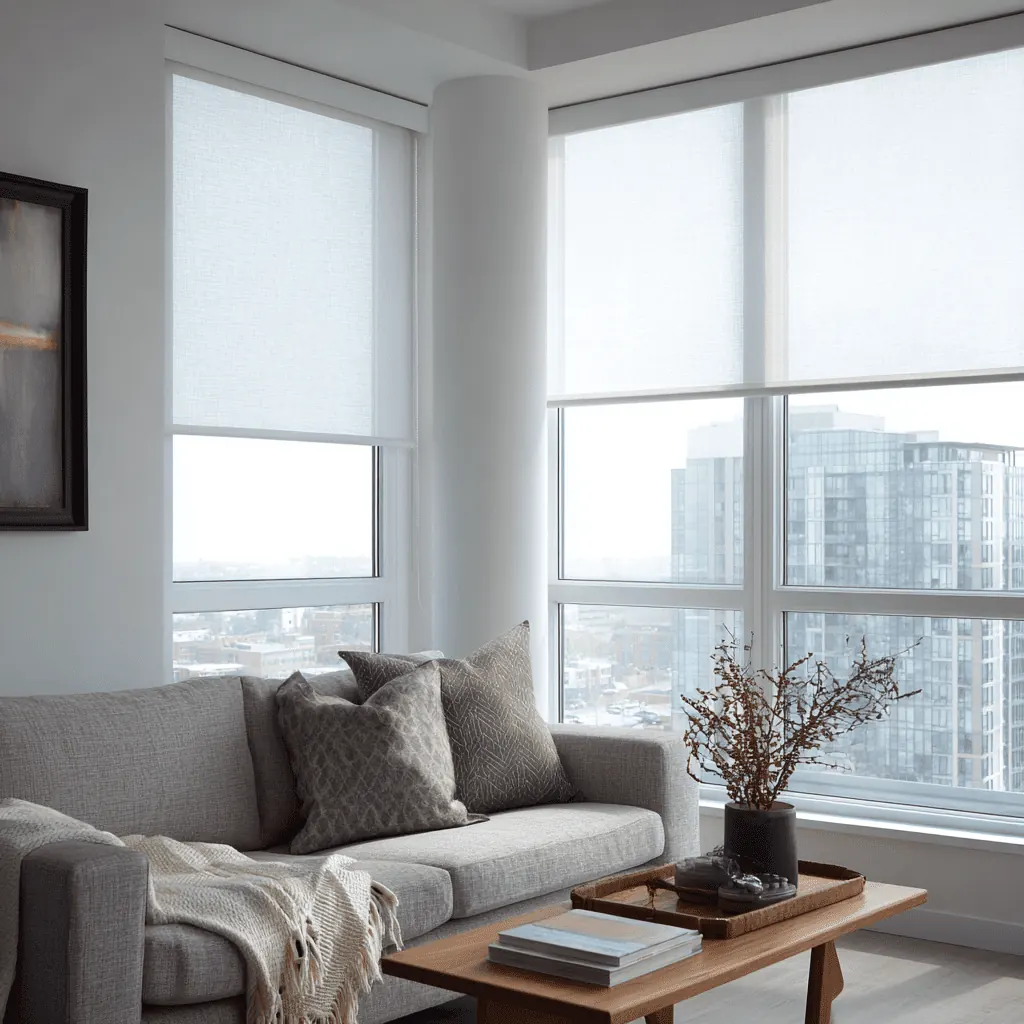
Learn moreRoller Shades in Plainfield
Custom roller shades for Plainfield homes. Light filtering through blackout fabrics on a tube sized to the span, with cassette or fascia to hide the roll. Roll direction gets decided at the measure so the fabric never fouls a crank or a window lock.
Learn moreSolar Shades in Plainfield
Screen fabric gets discontinued more often than you'd expect, and openness levels get renumbered between manufacturers. If a Plainfield room might get a second shade someday, order the fabric now or accept that the pair won't read as a matched set.
Learn moreCellular Shades in Plainfield
Two things nobody discloses. Cell fabric creases if it gets crushed and the crease doesn't come out, and the cord holes on a corded shade pass pinpoints of light down the middle. Neither one ends the shade, and both are better known before a Plainfield order.
Learn moreZebra Shades in Plainfield
Two settings out of one product. Aligned bands pass daylight and a filtered view. Offset bands overlap the solids and close the room down. What you don't get is a hard stop, because light keeps moving through the sheer sections in any Plainfield room.
Learn moreRoman Shades in Plainfield
We hang the shade and then dress the folds by hand, setting each one so it falls where it should instead of where the box shipped it. Skip that step and a Plainfield Roman looks like it hasn't been unpacked properly for a month.
Learn moreWoven Wood Shades in Plainfield
Woven woods are real reed, bamboo, jute and grasses woven on a loom, so no two shades come out identical. Color varies within a single shade and between shades in the same Plainfield order. That variation is the product, and a perfectly uniform one wouldn't be woven at all.
Learn moreBlackout Shades in Plainfield
Most blackout fabrics are white or light on the outside face regardless of the room color you choose, which keeps a Plainfield house looking consistent from the street. A dark inside face cuts the glow at the edges in a way a light one doesn't.
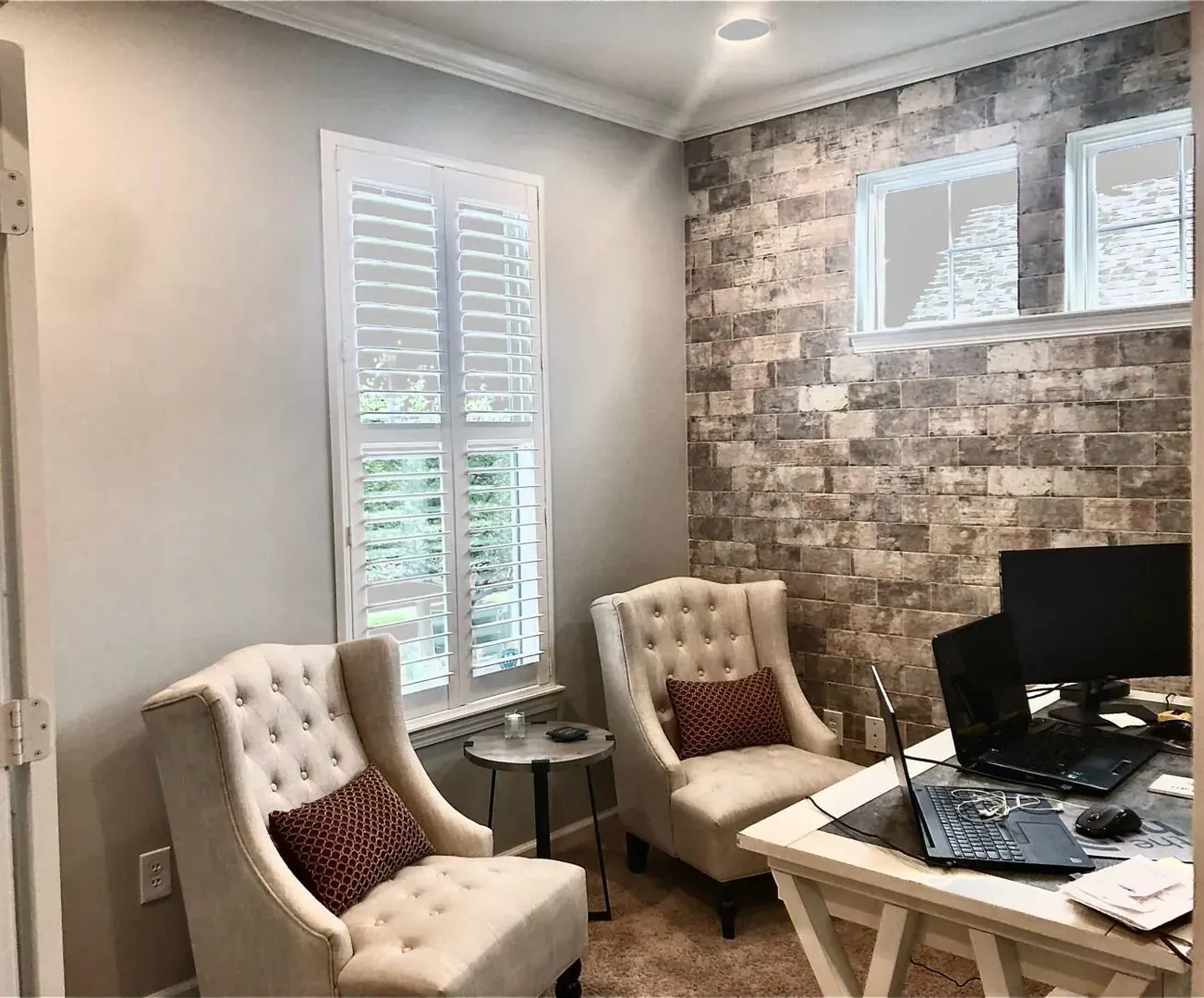
Learn morePlantation Shutters in Plainfield
If you want the window to disappear, don't buy shutters. They're furniture and they're meant to be seen. A Plainfield room where the goal is uninterrupted glass and a soft view wants a roller or a solar shade, and we'd rather point you there.
Learn moreCafe Shutters in Plainfield
A second Plainfield window done next year gets a different paint batch and, if the line has changed, slightly different hardware. On a half-height panel at eye level that's more visible than it would be up high. Do the room in one order where you can.
Learn moreMotorized Shades in Plainfield
Hunter Douglas puts PowerView battery life at about one year, and that's the number nobody mentions at the sale. Budget for replacements the way you'd budget for anything else running on cells, and put motors where reaching a Plainfield window by hand is genuinely awkward.
Learn moreCustom Drapery in Plainfield
A drapery rod carries real weight, and drywall anchors don't. Long spans need a center support bracket and screws landing in wood framing, which is why we locate the wood before the rod height gets set on a Plainfield wall rather than after the holes are in.
Learn moreValances & Top Treatments in Plainfield
An existing cornice is often worth recovering. If the board is sound and the proportion still suits the Plainfield room, new fabric over the same frame costs less than starting from nothing, and we'll tell you when the shape is the problem rather than the material.
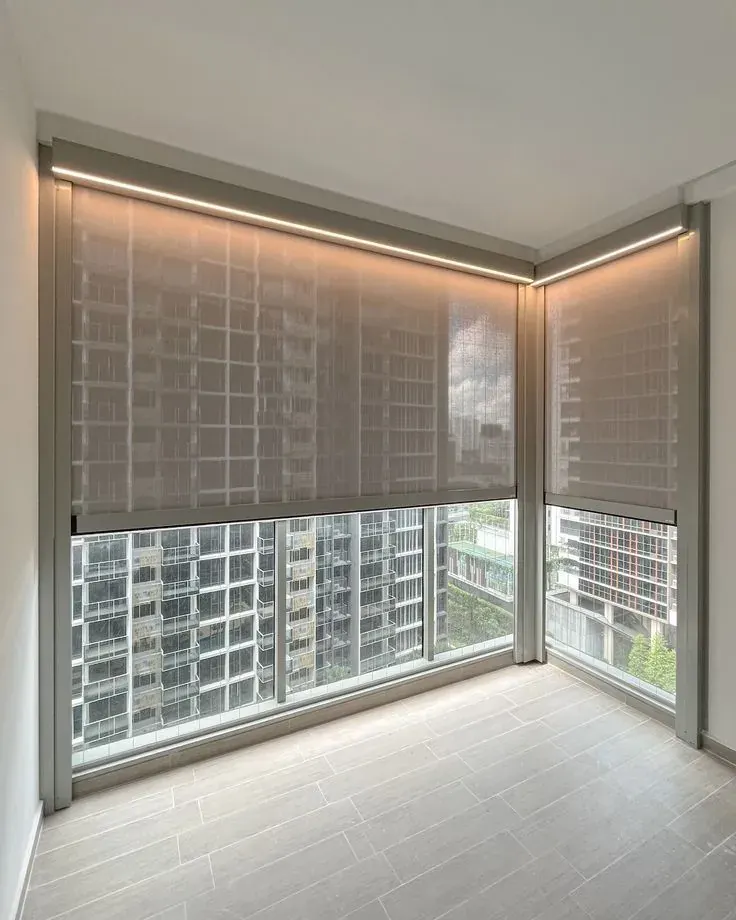
Learn moreExterior Solar Shades in Plainfield
Outdoor openings aren't square and posts aren't plumb. We measure a Plainfield porch bay at several heights and check each post for lean, because a shade built to one number will show a wedge of daylight down one side that no adjustment closes.
Learn moreRetractable Awnings in Plainfield
A hand crank works and it costs less. It also means somebody walks outside and turns it every time the sun moves, and the awning that doesn't get extended does nothing at all, so on a Plainfield patio that gets daily use the motor usually pays for itself in behavior.
Learn moreCommercial Window Treatments in Plainfield
A mock-up settles arguments cheaply. One opening finished with the proposed fabric, hardware and control lets a Plainfield facilities manager and the design team see the real thing under the building's own light, which costs far less than discovering a fabric choice was wrong across two hundred openings.
Learn moreSkylight Shades in Plainfield
Skylights come in shapes that never appear on a wall: trapezoids over a stairwell, triangles under a gable, long narrow runs. Each one is a custom template rather than a size off a chart, so a Plainfield order for these takes measuring time that a rectangle doesn't.
Learn moreSliding Glass Door Blinds in Plainfield
When a vertical blind fails it's usually one carrier or one clip, not the whole headrail. A single vane on a Plainfield door can often be replaced, though a vane ordered later will sit in a different dye lot and may read slightly off next to the originals.
Learn morePanel Track Blinds in Plainfield
These make a decent room divider, and that's a job most window products can't do. A Plainfield basement or a loft can be split with panels on a ceiling track that slide fully open when you want the space back, which is a use the product handles better than any window treatment.
Learn moreSheer Shades in Plainfield
When these need real cleaning, it's a professional job with the shade taken down, not a bucket and a cloth. Plan on that being occasional rather than routine, and keep the Plainfield shade out of the kitchen where cooking film will build up in the vanes.
Learn morePleated Shades in Plainfield
When a pleated shade fails, it's almost always the cord lock or a frayed lift cord rather than the fabric. That's usually repairable, so a Plainfield homeowner with a shade that won't hold position should ask about a restring before assuming the whole treatment is finished.
Learn moreBamboo Shades in Plainfield
Cordless lift matters here because a natural shade's heavier than it looks. Inner-cord non-compliance is a substantial product hazard under 16 CFR 1120.3, and a woven bottom rail is also the exact thing a Plainfield cat will climb, so nothing hanging is the right specification.
Learn moreDual Shades in Plainfield
How you finish the top changes the whole look, and it isn't only cosmetic. An exposed roll shows the banded fabric wrapping the tube, while a cassette closes it into a clean box and a fascia gives a flat face. On a Plainfield window with modern trim the cassette usually reads best.
Learn moreTop-Down Bottom-Up Shades in Plainfield
If nobody in the house will bother adjusting two rails, buy the standard version and spend the difference on fabric. We'd rather ask that question at the Plainfield measure than sell a feature that ends up parked in one position for the next ten years.
Learn moreCordless Blinds in Plainfield
South and west exposures fade whatever sits behind them. NFRC attributes roughly 40 to 60 percent of fading damage to ultraviolet, so a closed slat slows the process down but doesn't stop it. For a Plainfield room with real art or a wood floor you care about, layer a shade behind the blind.
Learn moreHardwood Shutters in Plainfield
In January, when the daytime average sits near 36F, a closed shutter panel puts a rigid layer and a pocket of still air in front of cold glass. It won't match a cellular shade for measured heating numbers, but a Plainfield room with shutters stops feeling like it has a draft at the window.
Learn moreComposite Shutters in Plainfield
Depth is the first thing we'll check. A shutter frame needs real mounting depth behind the trim for an inside mount, and where a Plainfield opening comes up short, the answer is a build-out frame carrying the panel forward. It works well and it changes the profile, so you should see it first.
Learn moreSmart Home Shade Integration in Plainfield
Smart shade integration for Plainfield homes. Existing motorized shades brought onto a hub or bridge for scenes, schedules, sun sensors and voice control. RF, Zigbee, Z-Wave, Thread and Matter each behave differently in a house, and range gets planned before hardware is ordered.
Learn moreBlind Repair & Restring in Plainfield
Blind repair and restringing across Plainfield. A failed cord lock, a slipped clutch, a broken ladder string or a bent headrail does not mean the whole blind is finished. If the treatment still fits the opening, repairing it is usually the cheaper honest answer and we will say so.
Learn moreShutter Repair in Plainfield
Pets and kids find the bottom louvers. A dog that pushes through to see the yard bends the lowest louvers on a Plainfield panel, and those specific louvers can often be replaced individually while the rest of the shutter stays exactly as it's.
Learn moreMotorization Retrofit in Plainfield
Removing the cord is a safety outcome, not a marketing line. Inner-cord non-compliance is a substantial product hazard under 16 CFR 1120.3, and a retrofit that takes the lift cord off a Plainfield child's bedroom shade addresses the real thing rather than adding a tie-down nobody uses.
Learn moreOutdoor Patio Shades in Plainfield
Porch posts are rarely plumb and porch floors are rarely level. That matters because a shade running in side tracks needs parallel rails, so we measure the Plainfield opening in several places rather than one, then build the track layout around what's actually there rather than the drawing.
Learn moreOffice Window Treatments in Plainfield
Hardware quality shows up in a shared space. Shades in a Plainfield office get operated by people who didn't choose them and don't own them, so metal brackets, a protected chain, a metal bottom rail and a clutch rated for the cycle count outlive a spec written entirely around fabric price.
Learn moreHealthcare Window Treatments in Plainfield
Healthcare work runs on a construction contract or purchase order, not the Indiana Home Improvement Contract Act, which covers residential jobs. Indiana licenses nobody in this trade, so a Plainfield facility is relying on the written scope, the submittal record, the fabric documentation and a contractor that's insured and bonded.
Learn moreMultifamily Window Treatments in Plainfield
Damage recharge policies only hold up with documentation. If a Plainfield property intends to bill a resident for a destroyed treatment, the move-in condition, the product installed, the date and its replacement cost all need to be on record, and that's another argument for one repeatable spec.
Learn more
Local Expertise, Real Results
Reveal depth is a material question, not a vintage one. At Avalon Estates the covenants force a 100 percent masonry ground floor and at The Landings at Hobbs Station the returns are drywall, and both of those were built this century. Only one takes an inside mount without an argument.
Plainfield Window Treatments works in Plainfield and across Hendricks County on everything from a single cordless cellular shade in a nursery to motorized rollers on a two-story wall of glass. The tall, unreachable openings are usually where motorization earns its cost. On low windows we'll say the cheaper option is fine, because it is.
We work Hendricks County, and Plainfield is the part of it that grew without rebuilding itself. The Census Bureau put the town at 38,574 for July 2025 against a 2020 count of 34,625, across 12,809 households. Builders pulled 176 single family permits here between January and August 2025, behind Avon's 354 and Brownsburg's 277, so new construction isn't what fills the calendar. Owner occupancy sits at 62.3 percent, well below Avon's 70.9 and Brownsburg's 75.1, because the logistics economy that filled roughly 50 million square feet of distribution space brought an apartment stock with it. What we actually measure most is the 44.4 percent built between 2000 and 2019 and the quarter of town that went up between 1940 and 1979. With a tape in hand those two are nothing alike.
The distance between Plainfield's two housing markets is wider than the town median suggests. Willow Pointe averages 4,314 finished sq ft and Avalon Estates runs a 3,727 sq ft median with a top recorded house at 7,012, so a quote there covers 28 to 50 openings. Two miles away, Olthof's Wren plan at Bo-Mar Estates is 1,607 sq ft and listed at $289,728, and an interior unit loses two whole elevations to party walls. Eight openings against forty five, under one town name. That's why we don't publish a standard whole house package. There's no standard Plainfield house. There's a half acre custom brick house on Bitternut Lane in Guilford Township, and there's a Lennar unit off Hume Avenue, and both of them are Plainfield.
Our Promise
Every opening gets three width readings, three height readings, a square check and a recorded mounting depth. You'll hear where an inside mount leaves a light gap before you pay for one. If a Plainfield opening won't take the product you picked, we say so at the measure, not on install day, and we'd rather lose the order than argue about it later.
How We Work Differently Around Plainfield
Serving Plainfield and Hendricks County with quality materials, thorough inspections, and transparent pricing.
Three mount conditions, one ZIP
Plainfield's 46168 holds deep pre war casing on the residential blocks off Main Street and flat drywall returns with no casing at all in the current Olthof and Pulte product. In between sit the covenanted brick subdivisions of the 2000s, where a masonry ground floor gives a genuine reveal. Those take different brackets, and on the shallow ones a different mount entirely. We record usable depth at every opening before recommending anything, because 28.2 percent of this town predates 1980 and none of it was built to a catalog.
Square isn't the default here
About 391 Plainfield units predate 1940 and another 25.3 percent went up between 1940 and 1979, more than three times Avon's share. Out of square openings are an assumption in the historic district and a hard check in the post war stock along the old National Road. So we take three width readings and three height readings on every opening and build from the smallest. A shade cut to the widest reading binds against the frame, and you find that out on install day rather than at the quote.
Light gaps disclosed before you order
An inside mount always leaves a light gap. Lutron publishes 3/4 inch per side on the Roller 20/64 and a standard factory deduction of 1/16 inch per side, and shades over 120 inches tall or past a 4:1 height to width ratio get larger gaps than that. Willow Pointe houses run to 5,755 sq ft and Avalon Estates to 7,012, so tall openings are common here. If a bedroom has to go genuinely dark, we quote a side channel or an outside mount instead of letting you discover the stripe of light at six in the morning.
We read the covenants first
Willow Pointe's Architectural Review Board runs a 15 day clock in which no response counts as a denial, the reverse of the usual default, and it expressly prohibits solar heat panels on any property. Hickory Woods, Avalon Estates and Saratoga Woodlands all require committee approval for exterior changes. None of the four published a window covering provision we could locate, so we quote interior product without inventing an approval step that nobody recorded. For anything mounted outside, get written approval before we order, because custom fabrication runs 2 to 5 weeks and an exterior product isn't returnable.
Real Jobs. Real Results.
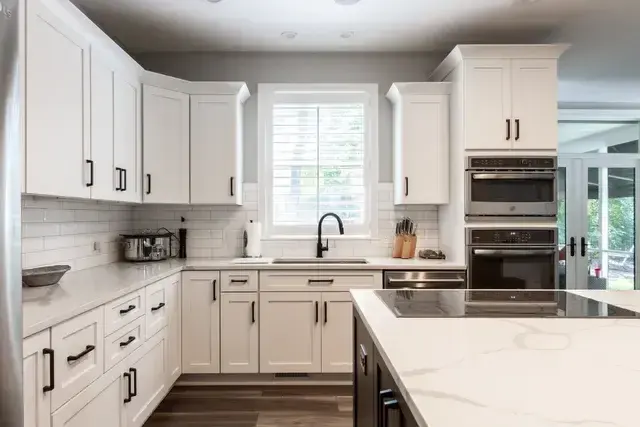
Photos from recent window treatment projects completed by the crew that measured them across Plainfield and Hendricks County. Every project is documented with photos and a written closeout package.
How We Close Out a Plainfield Job
Four steps, and the order matters. Most of what goes wrong on a Plainfield window covering job goes wrong at step one, because somebody assumed a mounting depth from a build year instead of measuring it. A contributing building in a district that runs from about 1840 to 1959 and a Boardwalk plan finishing this year on Evergreen Avenue are both Plainfield addresses. One has generous reveal and not one corner at ninety degrees. The other is factory square with almost no depth at all.
Measure and square check
Width at head, center and sill. Height at left, center and right. We build from the smallest reading and record a mounting depth for every opening. In the historic district and the 1940 to 1979 quarter of town we expect head, middle and sill to disagree, and we expect the left and right jambs of the same window to disagree with each other. Nothing gets assumed from the year on a county record.
Mount and product, in writing
Depth decides the mount before fabric ever enters it. You'll see finished width and finished height with the factory deduction applied, the mount we're recommending and the reason, and the light gap to expect if it's an inside mount. Indiana's Home Improvement Contract Act, IC 24-5-11, requires a written contract with a detailed scope and total price on residential work over $150, so you'll have one in hand before anything is ordered.
Order and lead time
Custom fabrication runs 2 to 5 weeks, and we'd rather tell you that at the quote than promise a date the factory never agreed to. We record product, color and dye lot reference at the order, which is what lets a second phase match a year later. If you're doing a Hickory Woods or Willow Pointe house in stages across 30 to 45 openings, we group by sightline so everything visible at once ships together.
Install and adjust
We're insured and insured, and the install ends with every unit level and operating. On motorized product we set travel limits and pair the remote or hub on site rather than handing you a manual. Packaging leaves with us. If a Saratoga Woodlands sunroom panel or a side opening in the post war stock needs a bracket shim to sit true against an out of square reveal, that happens on install day and not on a return trip.
What we see most often on Plainfield window treatments
Plainfield homeowners typically call us about these scenarios.
Stock Shades That Did Not Fit
Somebody measured the trim instead of the opening, bought four shades from a big box and found they were an inch too wide. There's a pile of them in the garage. That single mistake is behind a lot of our first calls in Plainfield, and it's why we measure rather than taking your numbers.
Builder Blinds Failing All At Once
A house four or five years old and suddenly three lifts have stopped holding and a valance clip has snapped. Builder packages are bought in volume at a price and they age together. The useful conversation is which openings deserve a proper product and which honestly just need a functional blind and no more money.
Cold Sitting Beside The Window
The heating is working and the thermostat says the room is fine, but nobody wants to sit in the chair beside the glass in January when lows sit around 20.9F. That's radiant loss to a cold surface, and a cellular shade drawn at dusk changes the sensation immediately. It's also the clearest example of a shade earning its keep in January rather than July.
An Awning That Has Given Up
The frame is straight but the fabric is faded, stretched and torn at one edge after years of central Indiana weather. Recovering it on the existing structure is usually far cheaper than starting again, and a lot of people do not know that is an option until somebody tells them.
A Bay Where Two Shades Collide
Nobody worked out the geometry at the corners, so when both are lowered they touch and neither hangs straight. It's solvable with different brackets or a deliberate small gap, and it's much cheaper to plan at the measure than to fix once three shades have been fabricated to the wrong clearances.
A Sunroom That Is Unusable In July
Glass on three sides and a July average high near 85.2F means the room hits an unpleasant temperature by early afternoon and stays there. Interior shades help. The bigger change is stopping the sun outside on the worst elevation, and that's a conversation most people have never had. Treating the interior alone in that room often disappoints people who spent real money.
Five Stages, In This Order
Custom window treatments are made to your openings, so the order matters more than it does in most trades. This is how every Plainfield job runs.
Free In-Home Measure
Every opening gets three widths, three heights and a diagonal square check, because houses settle and an opening that is out of square is the difference between a shade that runs true and one that binds. Mounting depth gets read at the jamb. It all goes on paper before any product conversation starts.
Product and Fabric, In Your Own Light
Samples get looked at in the room they are going in, not under showroom lighting. This is where openness factor, inside versus outside mount, roll direction and material get decided, and where we tell you the light gap you are going to live with.
Written Scope and Contract
Opening by opening, with the mount type, the light gap, the operation and the total price in writing. Indiana requires a written contract on residential work over $150 under IC 24-5-11, and we would write one anyway.
Custom Fabrication
Your sizes go to the workroom. Two to five weeks is typical depending on product and finish, longer on specialty shapes and motorized configurations. You get the real date at the measure rather than a range.
Install and Walkthrough
Brackets anchored for the substrate they are going into, everything checked level and square, motor travel limits set and scenes built with you standing there. Then we show you how it all works and take the packaging with us.
The Short Version From Plainfield Clients
4.8 stars across 497+ Google reviews for The Window Valet, who runs this service.
"I had a wonderful experience working with The Window Valet to select and install window treatments for our new construction home. Erica, our sales consultant, was incredibly helpful in providing an overview of the vast selection of window treatments offered, making tasteful recommendations for various spaces throughout our home, and advocating for us to offer the most competitive pricing possible so we could stay within budget. Handy, our installer, was a pleasure to work with and the perfect balance of quick and meticulous."
"Whole process went very smooth. Salesperson Justin was very knowledgeable and nice. Installer Leo was quick and efficient. Everyone was very professional and helpful. Price was about what we expected. Products seem well made so far and work as expected. Installers Handy and Eric even came back out after we had internet to set that up and show us how to use the app."
"This is the second home we have used Window Valet. Owner Josh is a trusted, honest businessman and ensures customer satisfaction. His staff is very professional, pleasant and you can depend on an answer to any question. Salesperson Erica was very helpful and knowledgeable of their product and our needs. Installer Handy, very knowledgeable of product and ensures you fully understand use of product. He was very respectful of our home, removed shoes, thoroughly cleaned up after installation."
"Justin was very thorough in explaining the options that would work for my unusually large sliding glass doors. He was patient and really listened and answered all my questions. So professional from start to finish!"
Motorized Shade Questions in Plainfield
Straight answers to the questions Plainfield homeowners ask most.
Indiana Weather Affects Window Treatments Year Round
Indiana sees some of the most varied weather in the country. Plainfield homeowners live in IECC climate zone 5A, which carries a real cooling load in summer and a real heating load in winter. July averages a high near 85F, January averages a high near 36F with lows near 21F, and the muggy season runs from late May into late September. That is why the same window can be the hottest room in the house in July and the coldest in January.
Cellular pays in both seasons
Zone 5A means a real heating load and a real cooling load in the same house, so the same product has to earn its keep in January and in July. DOE and Oak Ridge National Laboratory testing recorded cellular shades saving up to 20 percent of heating energy and up to 15 percent of total heating and cooling energy against a bare window. In Plainfield that counts most on the 2020s product at Trescott and Hobbs Station, which sits on former farm ground with no canopy doing any of the work for it.
Pond glare is its own problem
Willow Pointe is platted around a large central retention pond with recreational access for lakefront lots, and Avalon Estates uses its ponds and common areas as drainage easements that can never be built on. Water facing and open ground rear elevations take direct sun plus reflected light, which is a second source most rooms were never specified for. Openness factor decides how much view survives: 1 and 3 percent cut the most, 5 and 10 percent keep more of the pond. We'd rather sample two on your actual glass than pick one off a chart.
Fading gets slowed, not stopped
NFRC attributes roughly 40 to 60 percent of fading damage to ultraviolet light, which means the balance comes from visible light and heat and no window covering ends it. A solar shade or a light filtering cellular slows the rate, and that's the honest version of the sentence. In a Willow Pointe great room at the 4,314 sq ft average, with pond frontage and nothing between the glass and the sun, the difference shows up as a rug that keeps its color on one side longer. Anyone selling you a fabric that ends fading is describing a product nobody makes.
Bare ground on the new plats
Trescott publishes its lot minimums, which almost no Plainfield subdivision does: 80 by 125 feet in the R-3 portion and 62 by 125 in the R-4. On a 62 foot wide lot the neighbor's house is the only shade there is, and the rear elevation has none. Hobbs Station is the same story on 45.598 acres of former open ground. Exterior retractable awnings run $1,000 to $6,000 installed as a national range and stop heat before it reaches the glass, which is the one thing an interior product can't do.
Choosing the Right Treatment for Plainfield Rooms
An honest breakdown of the three we specify most often, and when each one is the right answer.
The one product in this trade with measured energy numbers behind it. Trapped air in the cells does the work, and DOE and ORNL testing found cellular shades saved up to 20 percent on heating energy and up to 15 percent on total heating and cooling against a bare window. In a Plainfield house that matters in January and again in July, which is unusual for one product. Single cell suits most rooms, double cell where the glass is large or the room runs cold. Top-down bottom-up gets you daylight and privacy at the same time.
What you reach for when the complaint is afternoon sun. Solar fabrics come in stated openness factors, and that number is the whole decision: a lower openness cuts more glare and more of the view, a higher one keeps the view and cuts less. On a west or south Plainfield window this is usually the honest answer rather than blackout, because blackout kills the room. Cassette or fascia hides the roll, and roll direction gets decided at the measure so the fabric does not foul a crank or a lock.
The one that stays with the house. Shutters are a finish rather than a covering, and they do not get replaced every few years. In Plainfield the material choice is technical rather than a matter of taste: composite and poly in bathrooms, kitchens, laundry rooms and sunrooms, because a four month humid season followed by a dry heated winter will move real hardwood, and hardwood only where the room stays conditioned. Louver size, frame style and divider rail get decided standing at your window.
See What Each Fabric Does To The Light
Pick a fabric below and the window updates. It's a drawing rather than a photograph, so read it as a rough guide to what each family does in a Plainfield room, and to what it doesn't do.
Openness factor is a measured fabric spec, so you can compare it line to line. The category names are not measured. One maker's room darkening can behave like another maker's light filtering, which is why the sample books come to the measure and get opened in the room they're going in, at the hour that room has the problem.
Experienced Window Treatment Installers Wanted
Ready to advance your window treatment career? Join Plainfield's trusted window treatment team. Competitive pay, ongoing training, and a team that takes its documentation and standards seriously.
Call to ApplyPlainfield Neighborhoods and the House Styles in Them
Window Treatment projects completed across Plainfield's neighborhoods and surrounding areas. Click any neighborhood for the specifics we have learned working there.
Where we respond near Plainfield
Our crews measure and install across Plainfield and the closest surrounding communities.
Window Treatment Systems Compared in Plainfield
Quick reference for the products we specify most often in these homes. Pricing reflects typical Plainfield installations.
Typical Plainfield market ranges as of 2026. The plus sign on upper numbers means your project may exceed the listed maximum based on inspection findings. Get a written scope and quote at no cost.
Expert Plainfield Window Treatment Crews Available Now
Free in home measure anywhere in 46168, from the pre war blocks off Main Street to the newest Drees and Pulte streets at Trescott. You get real numbers on paper, and you hear what won't work before you buy it.