Pleated Shades

Plainfield, IN Pleated Shades

One thin layer, no air pocket, and we'll say so

Call (317) 999-5154Get Free Quote
Quick Answer

The questions below are the ones that come up during measures for this product. They're answered here so you can think about them before somebody is standing in your room waiting for a decision.

  • Service: Pleated Shades for Plainfield homeowners
  • Service area: Plainfield, IN and surrounding areas
  • The measure gets scheduled quickly. The build does not, because your fabric or shutter panel is cut to your numbers after you order. Two to five weeks is normal. Service calls skip that step entirely.
  • Insured and bonded
  • Serving Plainfield, IN since 2008
Pleated Shades Services

Expert Pleated Shades for Plainfield Homes

A pleated shade is one layer of pressed fabric, which makes it the thin answer where depth is short. Plainfield's 1980 to 1999 stock is 21.6 percent of the town, split 10.2 percent in the eighties and 11.4 percent in the nineties, and that era brought applied wood casing, workable mounting depth and openings that are generally square. Willow Pointe's first phases start there. A pleated shade mounts into that depth without a deep headrail and stacks tight at the top, which is the argument for it on the shorter openings across the 25.3 percent of town built between 1940 and 1979.

What a pleat doesn't have is the air pocket, and that's the whole difference. A cellular shade traps air inside a honeycomb, and Department of Energy and Oak Ridge National Laboratory testing put its heating energy savings at up to 20 percent against a bare window. A single pleated layer does none of that work, which matters in a climate zone that averages a January low near 21 degrees and a July high of 85. Pleats also relax over years and lose their crispness, corded versions show pinholes where the lift cords pass through the fabric, and a pale pleat in a west room at Willow Pointe fades sooner than the cellular beside it.

When to Call

Signs You Need Pleated Shades

If you notice any of these in your Plainfield home, it is worth booking a measure. None of it is urgent, and none of it fixes itself either.

A stairwell window is too high to reach safely

Old pleats have gone soft and hang unevenly

A laundry sink window has warped a wood blind

A rental turns over and every window is bare

An office window needs cover but not insulation

Route holes glow in a line after dark

Cellular quotes came back higher than the room needs

A house is going on the market and looks unfinished

Temporary paper shades have been up for two years

Trim is too shallow for a deeper headrail

Our Process

How Plainfield Window Treatments Handles Pleated Shades

Every job follows the same five-step process. Transparent, thorough, and done right the first time.

1

Three widths, three heights, diagonal

2

Route holes or cordless decided

3

Headrail leveled and mounted

4

Full travel run twice per unit

5

Cleaning limits explained at handover

Real Project Photos

Pleated Shades in Plainfield

Photographs from real pleated shades jobs completed by our crew in Plainfield and surrounding areas.
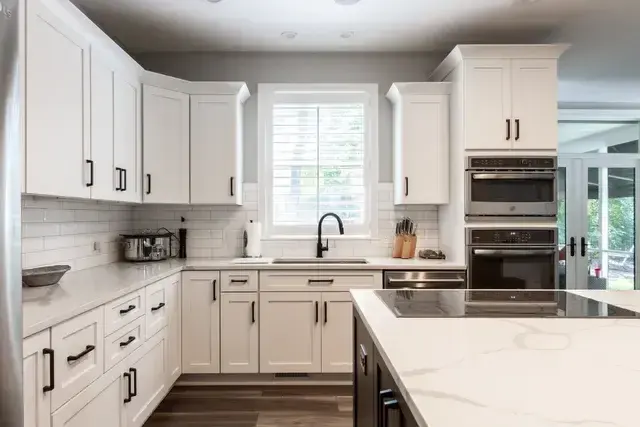
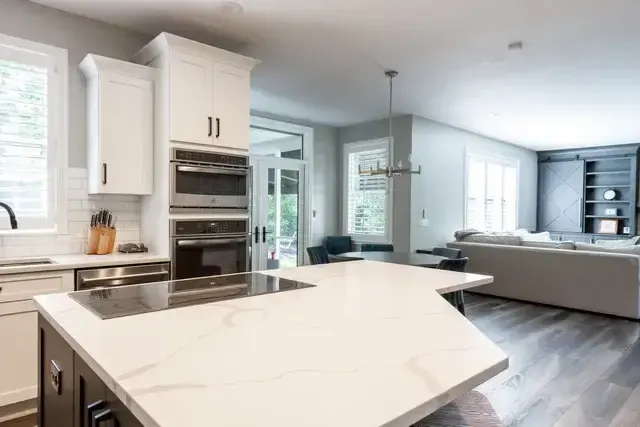
Custom shades measured and installed in PlainfieldPlantation shutters fitted to a Plainfield windowCellular shades in a Plainfield living room
Scope of Work

What Pleated Shades Includes

Every Plainfield job is documented item by item. Here is what the crew covers.

The energy question answered honestly up front: a pleated shade is one layer of fabric with no cell behind it

Rooms steered to cellular instead wherever trapped air is the actual reason for the purchase

Rooms where pleated is the right call identified plainly, from secondary bedrooms to offices to a rental turnover

Pleat size set against the opening, a fine pleat on short glass and a larger pleat where the drop can carry it

Fabric opacity settled in writing before the order, light filtering against room darkening

Reflective backing considered on hard west and south exposures, described as what it is rather than as an energy rating

Three widths and three heights per opening with a diagonal check for square

Mounting depth read so the headrail sits inside the opening where an inside mount is what you want

Stack at the top measured against the glass, since a stacked pleated shade still covers the top few inches

Cordless lift specified in rooms children use, with products conforming to ANSI/WCMA A100.1-2022 for cord access

Route holes disclosed on any corded unit, because a closed pleated shade shows those holes as a line of small bright dots

Light gap per side written onto the paperwork, along with the 1/16 inch per side factory deduction Lutron publishes

Top-down bottom-up priced where a room wants daylight high and cover low

Arched, angled and fan-shaped openings templated on site, since pleated fabric is what those get built from

Wide spans reviewed for headrail deflection and split into two units where that is the right answer

Every opening in a room ordered on one purchase so the fabric comes off the same run

The paperwork done properly, with IC 24-5-11 requiring scope, dates and total price on residential jobs over $150

Bottom rail leveled and full travel run twice at every unit before we pack up

Pricing

What Pleated Shades Cost in Plainfield

National category figures put stock shades near $60 to $600 a window and custom-fabricated shades roughly $250 to $2,600. Those are published national ranges, not a price for any opening in Plainfield. Pleated sits low in the custom band and that is the honest appeal of it. One layer of fabric, a light headrail and a simple lift add up to less than a double cell shade with a blackout fabric and two lift systems. Where the number climbs is the same place it climbs on everything: width, drop, a room darkening fabric, a cordless lift on a heavy unit, or a templated arch that somebody has to build to a pattern. Plainfield Window Treatments prices from measured openings across Hendricks County rather than from a per-window average.

By Product

How Pleated Shades Differ by Product

Every product in this trade behaves differently in a room. Here is what that means for this work.

1 inch pleat: The standard and the one most rooms get. It holds a crisp horizontal line at ordinary window heights, it stacks small at the top, and it keeps the scale right on the bedroom and office windows this product usually goes into.

Fine pleat: A smaller fold for short windows, transoms and specialty shapes. More folds across the same drop means a finer face, and it's what a small arch or a narrow sidelight needs so the shape doesn't look coarse.

2 inch pleat: A larger fold that suits tall glass and big rooms, where a fine pleat across a long drop starts to read as texture rather than as a line. Fewer folds also means a slightly smaller stack for the same height.

Light filtering fabric: The everyday specification. Diffused daylight comes through, the view does not, and the room stays bright. It's the fabric that suits an office, a stairwell or any bedroom where waking up with the sun isn't a problem.

Room darkening fabric: A denser fabric that cuts most light through the face. It gets a bedroom dim rather than dark, since a pleated shade doesn't seal at the edges and an inside mount still passes light down both sides.

Reflective backing: A metallized back face that bounces some of the sun striking the shade back at the glass. It's a real property of the fabric and it's not an energy rating, and we describe it that way rather than putting a number on it.

Cordless spring lift: A spring lift with no operating cord on the product, and the version we specify in any room a child uses. It also removes the route holes from the conversation, since there's no lift cord passing through the fabric.

Corded lift with a cord lock: The traditional and least expensive control. The lift cord runs through holes punched in the pleats, which is exactly where a closed shade shows a vertical line of small bright dots at night. Worth knowing before you save the money.

Top-down bottom-up: Two rails on one shade, so the top can drop for daylight while the bottom stays up against a sidewalk. It adds a second lift system and its own hardware, which is where much of the extra cost comes from.

Fixed arch and angle-top units: A half-round, a quarter-round or an angled top built to a site template and left fixed. Pleated fabric is what these get made from, because a pleated fan holds its shape where a rolling product simply can't follow the geometry.

Light Control

See What Each Fabric Does To The Light

Pick a fabric below and the window updates. It's a drawing rather than a photograph, so read it as a rough guide to what each family does in a Plainfield room, and to what it doesn't do.

Fabric type

Sheer, 10 percent openness

Ten percent of the weave is open, so you keep the view and most of the daylight. Glare drops a little. After dark, once your lamps are on, someone outside can read shapes through it, which is why this belongs on a view window rather than a bedroom.

Openness factor is printed on the fabric card, so you can compare one line against another before you order anything.

Keeps the viewNot private after dark

Solar, 5 percent openness

The usual pick for a west window or a covered porch. You can still read the yard through it, glare comes down noticeably, and the fabric intercepts a good share of the sun before it reaches you at four in the afternoon.

It also cuts the UV landing on floors and furniture. NFRC puts UV at roughly 40 to 60 percent of fading damage, so this slows fading rather than stopping it.

View and glare controlSlows fading

Solar, 3 percent openness

A tighter weave. The room goes dimmer and the view drops back to an outline. Choose it where the sun is the problem and the view is second, which around here usually means a west wall in July. That's a common call on this side of Indianapolis.

Openness affects how much you see out, not how private you are. A 3 percent fabric still shows silhouettes at night.

View becomes an outlineStrong glare control

Solar, 1 percent openness

Close to a solid fabric with a little view left in it. This is the strongest glare control in the solar family.

The trade is that it darkens the room on a gray January day too. Indianapolis averages a January high near 36F and the light is flat, so think about how the room reads in both seasons before you commit.

Darkest solar optionDim on gray days

Light filtering

No view through it. Daylight comes through the face diffused, so the room stays bright without a hot spot across the television or the kitchen island. This is the default for living spaces.

It isn't private in reverse at night. With the lamps on and the sun down, silhouettes still show.

No view through itBright without the glare

Room darkening

A denser fabric, usually with a liner behind it. Most of the light coming through the face is gone.

Light still arrives around the edges on an inside mount, so a room darkening shade gives you a dim room rather than a dark one. If someone in the house sleeps during the day, say so at the measure and we'll scope it differently.

Dim, not darkEdges stay bright

Blackout

The fabric itself passes essentially no light. What you'll still see is the perimeter. Lutron publishes an inside-mount light gap of about 3/4 inch per side on its Roller 20 and 64 shades, along with a standard factory deduction of 1/16 inch per side, and shades over 120 inches tall or past a 4:1 height-to-width ratio get larger gaps than that.

So if you need a genuinely dark bedroom, that gap has to be dealt with on purpose, either with side channels or by going outside mount. We tell you which one your opening can carry while we're still standing in the room.

Dark facePerimeter needs a plan

Openness factor is a measured fabric spec, so you can compare it line to line. The category names are not measured. One maker's room darkening can behave like another maker's light filtering, which is why the sample books come to the measure and get opened in the room they're going in, at the hour that room has the problem.

Common Questions

Pleated Shades FAQ

Questions we hear most often from Plainfield homeowners considering pleated shades.

One layer against two. A pleated shade is a single sheet of fabric creased into accordion folds. A cellular shade joins two sheets so the folds form closed cells with air trapped inside, and that trapped air is what does the insulating work Department of Energy and Oak Ridge National Laboratory testing measured at up to 20 percent of heating energy against a bare window. Visually they look similar from across a room. Functionally the cellular does something in January that the pleat doesn't. The pleat is thinner and it costs less, so it earns its place in the rooms where the thermal question isn't really the point.
Because on a corded version the lift cords pass through routed holes in the fabric at each fold, and light comes through every one of them. It's not a defect and it can't be fixed after the fact. On a single layer pleat those holes are more visible than they are on a cellular, where the cord runs inside the cell structure. If pinholes bother you, a cordless pleated shade removes them entirely, and that's the version we quote by default in bedrooms. In a back hall or a laundry nobody has ever noticed them, which is where the pleated shade genuinely belongs.
Usually yes, and that's its strongest case. The post war ranches and split levels along the old National Road corridor have shallow mounting depth and thin flat casing, and a pleated headrail is among the shallowest assemblies available. We still take a three point measure at head, middle and sill, because a half inch of variation across one opening is normal in stock that has been settling for fifty years. Where there genuinely isn't enough depth for a flush inside mount, we'll mount outside on the casing or on the wall above rather than sinking a headrail that sticks proud of the trim.
The fabric does, the installation mostly doesn't. A room darkening pleated fabric blocks light through its face, and then daylight runs the sides on an inside mount. Manufacturers publish the figure: three quarters of an inch per side on a comparable inside mounted shade, with taller shades getting more. So a room darkening pleat in an inside mount gives you a dim room with two bright vertical lines. Side channels or an outside mount carrying three to four inches of overlap is what closes that, and at that point you're spending shutter money on a pleated shade. Consider whether the room deserves a different product.
Several years, and it depends more on how the shade lives than on how it was made. A pleat holds its crease mechanically, and a shade that sits fully raised and compressed for months at a time takes a set that doesn't fully release. Sun accelerates it, so a west facing opening ages first. There's no repair for a relaxed pleat. That's a real argument for choosing cellular in the rooms you look at every day and pleated in the ones you don't, rather than choosing one product for the whole house and being disappointed unevenly.
It's a defensible choice for that use. Bo-Mar Estates is approved for 315 apartment units alongside 306 townhomes on 126 acres, and an interior townhome carries only eight to fourteen openings, so per unit cost matters more than per window character. A cordless pleated shade is inexpensive, light, easy to replace at turnover and has no accessible inner cord, which matters because inner cord accessibility is a substantial product hazard under 16 CFR 1120.3. Stock shades run $60 to $600 per window nationally against $250 to $2,600 for custom, and for a repeating unit plan the stock end is the honest recommendation.
Structure. A pleated shade is a single layer of fabric folded into pleats, so when you look at the edge you see one accordion. A cellular shade is two layers joined so the folds form closed cells, and when you look at the edge you see honeycombs with air inside them. That trapped air is the entire point of a cellular shade. A pleated shade doesn't have it, which is why it costs less and why we don't make an energy argument for it.
Not the way a cellular does, and we won't pretend otherwise. Any fabric between you and cold glass in a Plainfield January does something, since it slows the air movement at the window and takes the edge off a draft you can feel from the couch. What it doesn't have is the trapped air pocket. The DOE and ORNL testing that gets quoted in this trade, up to 20 percent heating energy savings and up to 15 percent of total heating and cooling energy, was done on cellular shades. If that number is why you're buying, buy cellular.
When the room needs a good-looking shade rather than an energy product. Secondary bedrooms, home offices, hallways, a bonus room over a garage, a rental between tenants, a house being prepared for sale. All of those want something that fits the opening properly and costs sensibly. Pleated does that. It's also the right answer on arched and angled openings where no other product follows the shape, and that has nothing to do with budget.
Mostly, and they do soften. A pleated shade holds its folds because the fabric was heat-set at the factory, and that set relaxes slowly, faster on a hot window than on a shaded one. After several years on a west-facing Plainfield window you may see the folds sit slightly less sharp than they did, particularly at the bottom of the shade where it spends most of its life stacked. A cellular shade holds its shape longer because the cells brace each other. That's a real difference worth knowing.
Because the lift cord runs through holes punched in the fabric. On a corded pleated shade, each pleat has a small hole for the cord to pass through, and with the shade down those holes stack into a vertical line of bright dots that you notice at night and barely see during the day. It's construction, not damage. Cordless lift removes them entirely, since there's no cord passing through the fabric, and that's one of the better reasons to spend the difference.
In any room a child or a pet uses, yes, and we specify it that way. There's no operating cord on the product at all, which is the direction the ANSI/WCMA A100.1-2022 work on cord access points, and inner-cord non-compliance is treated as a substantial product hazard under 16 CFR 1120.3. On a pleated shade there's a second benefit, which is the route holes disappearing. The tradeoff is cost and the fact that a wide unit wants a hand at each end of the bottom rail rather than one in the middle.
Dim, not dark, and the reason is the edges rather than the fabric. A room darkening pleated fabric blocks most of the light through its face. What it can't do is close the gap down each side of an inside mount, and Lutron publishes 3/4 inch per side as a real inside-mount figure on their roller product to give you a sense of the scale. For a genuinely dark bedroom the answer is an outside mount with real overlap, or a blackout fabric running in side channels, which is a different product.
Yes, and pleated is usually what those get built from. A half-round over a front door, a quarter-round in a stairwell, an angled top following a vaulted ceiling: all of them get a site template, and the shade is fabricated as a fixed fan to that pattern. Fixed means it doesn't operate, which surprises people, so we say it early. If the shape has to move, the honest answer is often a movable shade below the straight line and a fixed unit above it.
Less than most products, and not nothing. A raised pleated shade gathers into a compact stack at the headrail, smaller than a double cell shade of the same height and much smaller than a woven natural. On a tall window that stack is a couple of inches of glass. On a short window it's a bigger share of the view, which is why we measure the drop and tell you where the bottom rail will actually sit when the shade is fully up.
Dust them and leave them alone otherwise. A vacuum on low with a brush head across the face, or a soft duster run along the folds, handles routine dirt. Spot marks come off with a barely damp cloth blotted, never rubbed hard, because the fabric is thin and the heat-set folds don't like being worked. Don't submerge them, and don't use a steamer on them. Fabric that has been soaked tends to come back with soft folds that never recover their line.
Reasonably, with the usual honesty about the exposure. A west or south window in Hendricks County takes real sun from late May into September, and a light colored pleated fabric there will soften in color over the years more than the same fabric on a north window. A reflective backing helps the fabric itself and improves how the shade looks from the street, since all the shades read the same color from outside. On the room behind it, NFRC puts UV at roughly 40 to 60 percent of fading damage, so the shade slows what happens to your floors. It doesn't end it.
Wide enough for most rooms, with weight and headrail deflection as the limits. Pleated fabric is light, so the fabric itself isn't the constraint. What matters is the headrail across a long span and the way a wide bottom rail behaves when you lift it from one end. Past the point where a single unit gets awkward, two shades sharing an opening reads better than one that drags. We work that out at the measure rather than after the box arrives.
Close, and possibly not exact. Pleated fabrics run in dye lots, so a shade woven this year can sit slightly off one woven three years ago. Across a hallway nobody sees it. On two windows in the same wall everybody does. The practical advice is to do a room in one order, even the small window you were going to skip. We write the fabric name and color onto your paperwork so a later order at least starts from the right reference.
Two to five weeks is the normal custom fabrication window, and pleated usually sits at the shorter end because it's a simple build. Templated arches and angle tops run longer, since somebody is making a one-off to your pattern. The window goes into your paperwork along with the scope, the dates and the total price, which the Indiana Home Improvement Contract Act requires on residential work over $150.
Free In-Home Measure

Schedule Your Free In-Home Measure in Plainfield

Contact Information

Reach Us Directly

Our team prioritizes scheduled measures and service calls, and books in-home measures during business hours.

Office
1417 Commerce Avenue, Indianapolis, IN 46201
Hours
Mon-Fri 8a-6p
Service Area
Plainfield, IN and Surrounding Areas

Ready to Book Your Measure?

Call us to set up an in-home measure, or to ask about a treatment that has stopped working. We will talk it through on the phone first.

Service area

Serving Plainfield and the surrounding area

Call NowGet Quote